etykieta herbaty
How to Read a Tea Label? Ingredients, Flavors, Country of Origin, and Leaf Grades
How to read a tea label? Check what the ingredients, flavors, country of origin, leaf designations, and brewing instructions say to consciously compare products.
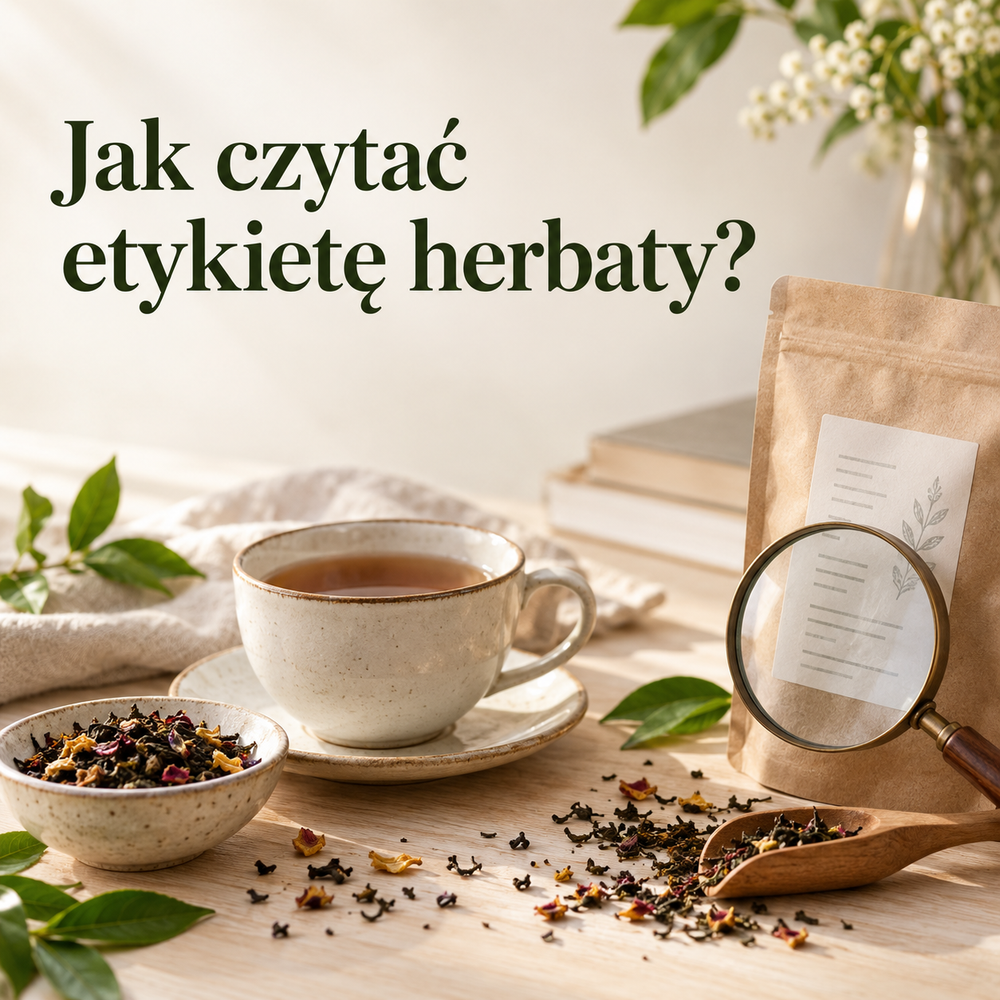
A tea label can tell you much more than just the name on the front of the packaging. The most important information includes the type of tea, list of ingredients, additives and flavorings, country of origin, and any markings indicating leaf size and appearance. It's worth reading them in that order, because while the trade name might be appealing, only the details reveal what's truly inside.
You don't need to know all the tea abbreviations or growing regions to properly compare two products. Simply develop a simple habit: first check the tea base, then the ingredients, then the origin, and finally any additional markings. When choosing loose leaf teas, this method quickly helps distinguish a simple product from a more complex blend.
In short
- the name on the front of the package does not replace the ingredient list,
- first, check if the base is black, green, white, oolong, or another infusion,
- read the ingredients from beginning to end, paying attention to additives and flavorings,
- distinguish the tea's country of origin from the country of packaging or brand headquarters,
- abbreviations like OP, BOP, or FOP primarily describe the form and sorting of leaves, not a simple quality scale,
- brewing instructions are a guide for a specific product and are often more practical than a general rule for an entire category.
Where to start reading a tea label?
The easiest way to start is by answering one question: what is the base of the product? The packaging might feature a brand name, collection name, or dominant flavor, but underneath, you should look for information on whether you're dealing with black tea, green tea, white tea, oolong, rooibos, a fruit blend, or a herbal infusion.
This is important because two products with similar flavor names can have completely different bases. A citrus blend on black tea will behave differently during brewing than a similar composition based on green tea.
If you want to learn to recognize the differences with specific examples, you can compare classic Basilur Gold Black Tea - 100 g with aromatic Basilur Sweet Treats Green Tea in a tin - 75 g. The mere comparison of two labels clearly shows where the product name ends and specific information about its character begins.

How to read a tea ingredient list?
The ingredient list is one of the most important parts of the packaging. Read it in full, not just the first word. If the product is a blend, you'll find the tea base and other elements, such as fruits, flowers, spices, or flavorings.
In practice, it's worth paying attention to three things:
- what is at the beginning of the list, meaning what forms the basis of the blend,
- what additives are listed separately, for example, orange peel, rose petals, or spices,
- whether the flavor comes from actual additives, flavoring, or a combination of both.
Don't assume that a flavor name implies a large quantity of a given fruit or spice. A product named, for example, "mango" might contain mango, mango flavoring, both ingredients, or a composition where mango is just one element. The answer is only in the ingredients list.
What do percentages in ingredients mean?
If a percentage is given for an ingredient, it's easy to compare its proportion with other elements in the blend. This is especially useful when two products have similar names but differ in proportions.
However, it's not worth judging the taste solely based on percentages. Some spices, flowers, or flavorings are intense even in small amounts. The percentage indicates the proportion of the ingredient, not how strongly it will be perceived in the cup.
How to understand flavorings on a label?
The safest rule is simple: read exactly what the manufacturer states and don't assume more. If the ingredients list mentions flavoring, it means it's a part of the recipe. If a more detailed description of the flavoring appears on the label, it's worth treating it literally, without automatically equating it with pieces of fruit or spices.
Flavorings are not the same as visible additives. Dried lemon peel, a rose petal, or a piece of apple is an ingredient that can be seen in the blend. Flavoring is responsible for part of the scent and taste profile, but it doesn't have to be visible in the dry tea.
Therefore, when buying flavored tea, it's good to check two places at once: the product name and the ingredients. Only then will you know if a given composition matches what you are looking for.
Tea's country of origin vs. packaging location
Various country names may appear on the packaging, and not all of them indicate the place where the leaves grew. It's important to distinguish between the origin of the raw material, the packaging location, and the manufacturer's or distributor's details.
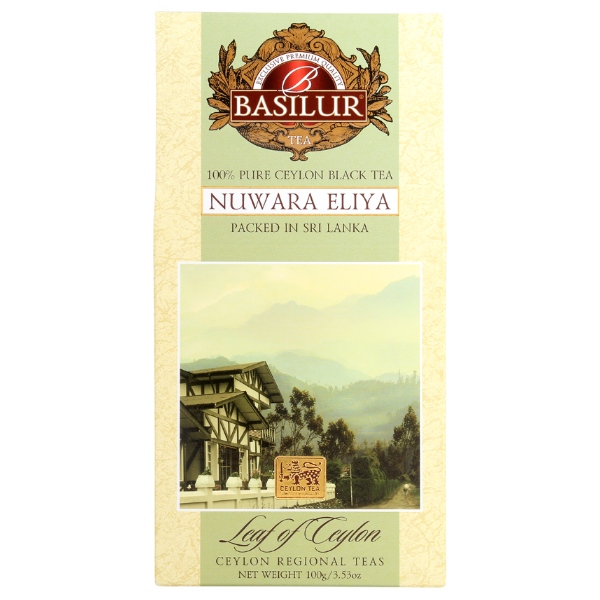
If you're interested in the origin of the tea itself, look for information directly related to the leaves. For example, "Ceylon" or "Ceylon Tea" refers to tea associated with Sri Lanka. In the store, you can compare different Ceylon teas and see how manufacturers describe the origin on their packaging.
The brand's headquarters alone doesn't tell you where the tea comes from. A company might have its headquarters in one country, package the product in another, and use leaves from yet another region.
What can regional information tell us?
For more detailed tea descriptions, you might find the name of the growing region. Such information is more interesting than a general country designation, as growing conditions, altitude, harvest time, and processing methods influence the character of the infusion.
However, you don't need to memorize all regions. To start, simply note which origins you enjoyed the most. After a few comparisons, you'll easily notice your preferences and choose subsequent products more consciously.
OP, BOP, FOP, and other leaf designations
On the packaging of some teas, especially black teas, you might find abbreviations like OP, BOP, or FOP. These relate to the classification and appearance of the leaves. They can indicate, among other things, whether the leaf is whole, broken, or how it was sorted.
It's important not to treat these abbreviations as a simple scale from "poor" to "best" tea. Finer leaves do not automatically mean an inferior product. However, they usually affect the extraction rate, so finer grades can brew faster and produce a more intense infusion in a shorter time.
Leaf designations are therefore useful technical information, but they should be read together with the origin, freshness, processing method, and your own taste assessment.

Does the appearance of the dry leaves match the label?
After opening the package, it's worth comparing the description with what you see. If the label mentions loose leaf tea with flowers or fruit pieces, some of these elements may be visible in the blend. If the leaves are intentionally finer, this doesn't necessarily indicate a defect, especially if such a style results from the product type.
It's best to look at the dry leaves without a single rigid rule. Large leaves are not always better than small ones, and the color of the blend itself doesn't determine quality. Appearance is one element of evaluation, not the whole test.
How to read brewing instructions?
Information about temperature, amount of tea leaves, and brewing time is a practical addition to the label. It's worth starting there, especially with a product you're not yet familiar with.
General rules state that black teas usually tolerate hotter water better than green teas, but the manufacturer's specific instructions might be more accurate for a given blend. If the first infusion is too astringent or too weak, change one parameter at a time: time, temperature, or amount of tea leaves.
How to evaluate a tea label in 30 seconds?
- Read the full product name. Determine the type of tea or infusion.
- Find the ingredients list. Check the base, additives, and flavorings.
- Pay attention to percentages. If provided, compare the proportion of key ingredients.
- Check the origin. Distinguish the tea's country from the packaging location and company address.
- Look at leaf designations. Treat them as a description of sorting and form, not as a standalone quality assessment.
- Read the brewing method. This is the best starting point for your first cup.
Common mistakes when reading a label
Judging a product solely by its name
The name is meant to attract attention and describe the product's character, but it doesn't replace the ingredient list. Two teas with similar names can be based on different types of leaves and have completely different additives.
Treating every country on the packaging as the country of origin of the leaves
The manufacturer's or distributor's address is not the same as the tea's origin. Look for information directly related to the raw material.
Assuming that a long abbreviation indicates higher quality
Leaf designation systems are more complex. An abbreviation can help predict the form of the dry leaves and the brewing method, but it doesn't provide a complete answer to the question of quality.
Ignoring brewing instructions
Even good tea can taste worse if prepared at the wrong temperature or steeped for too long. Information from the package is a good starting point.
FAQ
Should the tea ingredients be the most important element on the label?
When comparing products, the ingredients list is one of the most important elements because it shows the base of the blend, additives, and flavorings. However, it's worth reading it together with the origin and brewing instructions.
Is a tea with a short ingredient list always better?
No. A short ingredient list simply means a simpler recipe. A good flavored blend can have more ingredients if they are purposefully selected and match your preferences.
Does "flavoring" mean the same as "pieces of fruit"?
No. Flavoring and pieces of fruit are different elements of a recipe. Therefore, it's always worth checking if the ingredients list contains actual additives, flavoring, or both.
Does "Ceylon" mean tea from Sri Lanka?
Yes, the term Ceylon in the context of tea origin refers to Sri Lanka. However, it's worth reading the entire designation on the package and distinguishing the origin of the leaves from the packaging location.
Is BOP worse than OP?
It cannot be simplified like that. BOP indicates broken leaf, and OP indicates a different form of sorting. Finer dry leaves often brew faster, but the abbreviation itself does not determine the quality of the finished infusion.
Is the brand's country the same as the tea's country of origin?
No. A brand can operate in a different country than where the leaves are grown. Look for information about the origin in the raw material description or the product's relevant designation.
Is it worth comparing the labels of several teas?
Yes. This is one of the quickest ways to learn the differences between pure tea, a blend with additives, and a flavored product.
Summary
A good label analysis isn't about looking for one magic designation. First, determine the type of tea, then read the ingredients, check additives and flavorings, then the origin, and any abbreviations related to the leaves. Finally, pay attention to the brewing method.
After a few such comparisons, the label ceases to be a collection of technical information and begins to genuinely help in your choice. If you want to practice this method with different styles and compositions, check out the current loose leaf teas and compare several packages before making a decision.