herbata liściasta
What water is best for tea: tap, filtered, or bottled?
Tap, filtered, or bottled? Find out which water best brings out the taste of tea, how hardness affects the brew, and when it's worth using a filter.
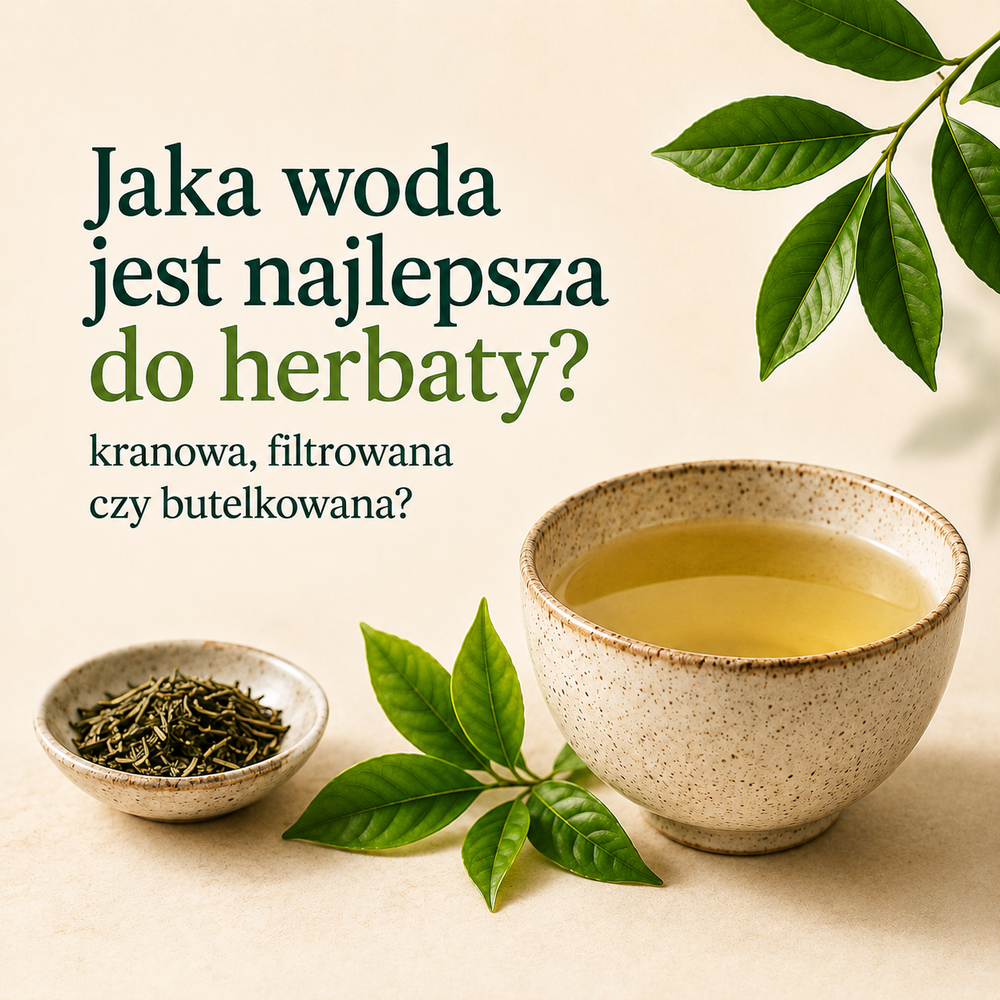
Water makes up almost the entire volume of a cup of tea, so its taste and mineral composition have a very significant impact on the brew. The best water for tea should primarily be fresh, neutral in taste, and not too hard. In many homes, filtered tap water will be the best practical choice, but this is not always necessary.
If tap water doesn't have a distinct chlorine smell, doesn't leave a lot of scale, and tastes good on its own, it's worth trying it first. If it's hard or has a characteristic aftertaste, a filter can easily improve brewing conditions. Bottled water can also work, provided it is not highly mineralized and does not have a dominant mineral taste.
The difference is particularly easy to notice with delicate loose leaf teas, where subtle aromas can be masked by overly hard or intensely flavored water.
In short: what is the best water for tea?
- Tap water - good if it has a neutral taste and is not very hard.
- Filtered water - often the best compromise when tap water has a lot of scale, a chlorine aftertaste, or distinct minerality.
- Bottled water - choose still water with a mild taste and rather low or moderate mineralization.
- Very hard water - can suppress the aroma of tea, promote sediment, and change the appearance of the brew.
- Extremely demineralized water - also does not always give the best effect, as the brew can seem flat.
The most important rule is simple: if the water doesn't taste good on its own, it probably won't help the tea either.
Why does water change the taste of tea so much?
During brewing, water extracts compounds responsible for the aroma, color, sweetness, astringency, and structure of the brew from the leaves. Its composition therefore affects not only the taste of the water itself, but also how the tea's components behave.
Water with a high mineral content, especially those causing hardness, can make delicate floral or grassy notes less discernible. The brew may appear darker, less clear, and after a while, a thin layer of sediment may appear on the surface.
On the other hand, very soft water can be excellent for subtle teas, but water almost completely devoid of minerals does not always give a full and balanced taste. Therefore, instead of looking for water with extreme parameters, it is better to choose water that is neutral and moderate.
Is tap water suitable for brewing tea?
Yes. In many places, tap water is perfectly suitable for preparing tea. The mere fact that it comes from the tap does not mean it needs additional treatment.
The simplest test is to pour a glass of cold tap water and taste it plain. If it's pleasant, has no distinct chlorine smell or metallic or chalky aftertaste, it's worth using it for tea and evaluating the effect.
The problem begins when a thick layer of scale forms very quickly in the kettle, or the brew regularly has an unpleasant sediment and a muted aroma. In such a situation, filtration can make a noticeable difference.
When can tap water be a problem?
Most often when it is very hard or has a noticeable smell associated with treatment. Water with high hardness may not be bad for drinking, but sensorily it may not be an ideal partner for delicate tea.
With strong black tea, the difference is sometimes less obvious. With subtle green tea, the impact of water can be noticed much faster.
Is filtered water best for tea?
Often yes, but only if the filter solves a specific problem. A typical pitcher filter can reduce some of the compounds responsible for hardness and improve the taste of the water. If tap water is very calcareous or has a distinct aftertaste, this is a simple way to get a more neutral base for brewing.
However, you don't need to filter good tap water just because you're making tea. If, after comparing the brew made with filtered and unfiltered water, you don't feel an improvement, the extra step is not needed.
How to check if the filter actually helps?
Brew the same tea in two identical cups. Use the same amount of dry leaves, the same temperature, and the same brewing time. In one cup, use tap water, in the other, filtered water.
Compare the aroma, clarity, astringency, and aftertaste. Such a simple test provides more information than relying solely on the filter label.
A good product for such a comparison is the classic Basilur Sencha Tea - 100 g, because with green tea it's easy to notice if the water helps maintain a fresh and clean brew profile.
What bottled water for tea?
If tap water is very hard or has an unpleasant taste, you can use bottled water. It is best to choose still water with a mild taste and low or moderate mineralization.
Highly mineralized water is not automatically better just because it contains more minerals. In tea, it can even dominate delicate notes and change the structure of the brew.
It is also not advisable to use sparkling water. Carbon dioxide changes the perception of taste, and heating such water offers no practical benefit in brewing.

Hard or soft water for tea?
In most cases, soft or medium-hard water works better than very hard water. However, it's not about removing all minerals from it.
Hardness can often be recognized by everyday signs. If the kettle quickly becomes covered with white residue, scale regularly appears on fixtures, and tea has a visible film after cooling, the water may have significant hardness.
When comparing several waters, pay attention not only to the intensity of the taste. Good water should allow the tea to show its own character.
Does sediment on tea mean bad water?
Not always, but the water's composition greatly influences the appearance of sediment. Complexes involving leaf components and minerals present in the water can form on the surface of strong tea. This phenomenon can be more pronounced with harder water and after the brew has cooled.
If the sediment is visually or tastefully bothersome, it's worth doing a test with filtered water. If the problem significantly decreases with the identical brewing method, you have a practical sign that water was one of the main factors.
Should water for tea be boiled only once?
It is best to fill the kettle with as much fresh, cold water as you currently need. Re-boiling the same small portion multiple times does not improve the taste and can increase the concentration of some mineral components due to evaporation.
This does not mean that water becomes automatically unusable after re-boiling. It is primarily about a simple principle of quality and repeatability: a fresh batch of water makes it easier to achieve a similar effect every time.
What water for green tea?
Green teas often have a delicate, vegetal, floral, or fresh profile. For this reason, the influence of water is particularly noticeable in them. Neutral, not too hard water helps maintain the subtlety of the brew.
Temperature is equally important. Even excellent water won't save green tea steeped in overly hot water and brewed for too long. For many green teas, a good starting point is around 70-85°C, but the specific product's instructions take precedence.
What water for black tea?
Black tea usually tolerates higher temperatures and stronger extraction better, so the effect of hard water may be less obvious than with green tea. However, very hard water can still flatten the aroma and increase the amount of sediment.
You can compare two waters with a classic tea, such as Basilur Uva black tea tin - 100 g. Use exactly the same proportions and time, so that the difference primarily comes from the water.
What water for oolong?
Oolong can be very light and floral, or more oxidized, roasted, and fuller-bodied. For delicate styles, neutral water is particularly important, as it's easy to mask subtle aromas with excessive minerality.
For multiple infusions, it's worth using the same water throughout the tasting. This makes it easier to observe changes resulting from successive steepings of the leaves, rather than from a change in water composition.

How to find the best water for tea yourself?
- Choose one well-known tea.
- Prepare three samples: tap water, filtered water, and selected still bottled water.
- Heat each to the same temperature.
- Use identical amounts of dry leaves and water.
- Steep for exactly the same time.
- Compare aroma, taste, astringency, clarity, and aftertaste.
Don't try to guess which sample is more expensive or more "premium." Choose the one where the tea simply tastes best and most closely resembles the profile you expect.
Common mistakes when choosing water for tea
Choosing water with the highest mineralization
More minerals do not mean a better brew. High mineralization can dominate delicate aromas.
Filtering water without checking the effect
A filter is a tool, not a mandatory part of the ritual. First compare two samples and assess whether you actually feel a difference.
Changing several parameters simultaneously
If you are testing water, do not simultaneously change the time, temperature, and amount of dry leaves. Otherwise, you won't know what influenced the result.
Using water with a distinct taste of its own
Highly mineralized, chlorinated, or metallic water can introduce notes that are not present in the tea itself.
FAQ
Is tap water good for tea?
Yes, if it has a neutral taste and is not very hard. It's worth starting with tap water and only then checking if filtration improves the brew.
Does a pitcher filter improve the taste of tea?
It can improve the taste, especially when tap water is hard or has a noticeable aftertaste. It is best to confirm this with a simple comparative test.
Can mineral water be used for tea?
Yes, but it is better to choose water with a mild taste and not too high mineralization. Very mineral water can mask the aroma of the leaves.
Is spring water suitable for tea?
Yes, if it is still and neutral in taste. However, the category name itself does not guarantee that every brand will produce an identical effect.
Does hard water cause sediment on tea?
It can promote the formation of sediment and change the clarity of the brew. If sediment is frequent, it is worth comparing the same brew with filtered water.
Do you need to use different water for green tea than for black tea?
Not necessarily, but delicate green tea often more clearly shows the flaws of very hard or intensely flavored water. Neutral water will work well in both cases.
Does re-boiled water spoil tea?
It doesn't automatically mean a bad brew, but the best consistency comes from a fresh batch of water heated when needed.
Summary
The best water for tea doesn't have to be expensive or specialized. It should be fresh, neutral, and not too hard. If tap water tastes good, start with it. If it has a lot of scale or a distinct aftertaste, test a filter. Treat bottled water as an alternative, choosing mild, still water with moderate mineralization.
You will learn the most from your own comparison. The same tea brewed in two different waters with identical parameters will quickly show whether changing the water actually improves the brew.