herbata liściasta
Oolong tea - what is it, how does it taste, and how to brew it properly?
What is Oolong tea, how does it taste, and how to brew it? Learn the differences between oolong, green, and black tea, as well as the rules for temperature, time, and multiple infusions.
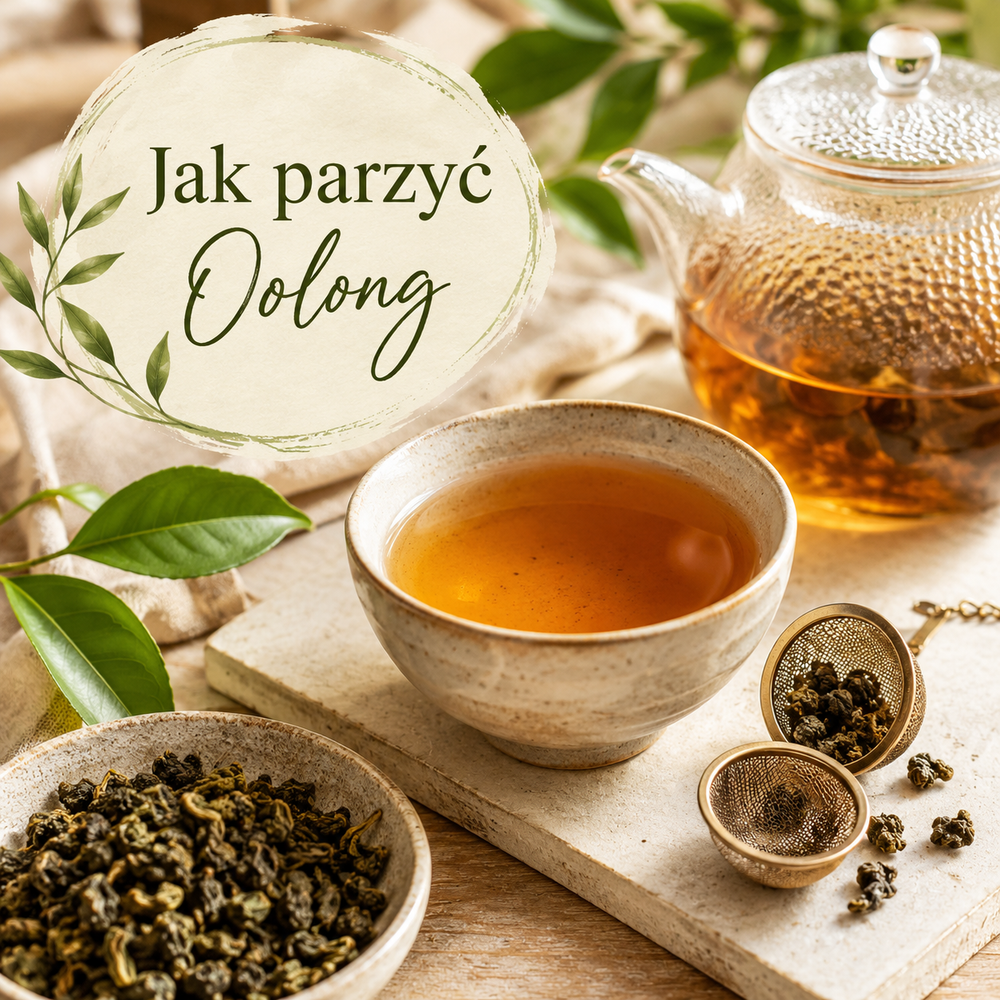
Oolong is a type of tea that, in terms of production method, falls between green tea and black tea. The main difference lies in the degree of leaf oxidation: in oolong, the process is deliberately stopped at a chosen stage, which means one tea can be light and floral, while another can be deep, fruity, or roasted.
Therefore, there isn't one single oolong taste. This category encompasses a very wide spectrum of styles. Delicate varieties can resemble the freshness of green tea, while more oxidized and roasted oolongs can approach the character of black tea, yet retaining their own structure and aroma.
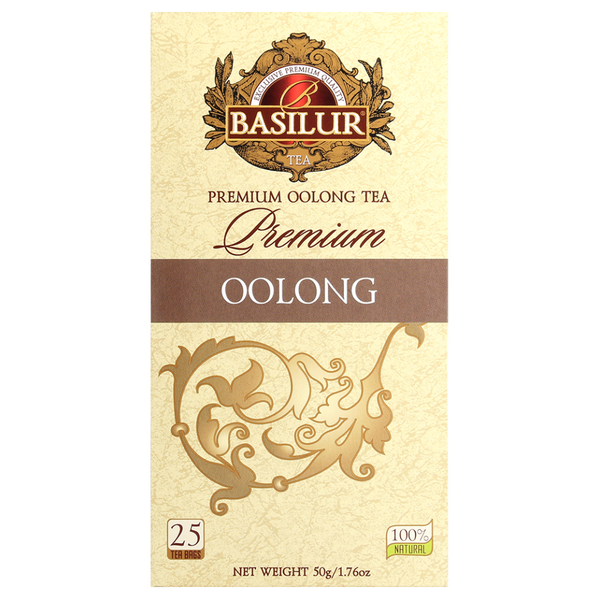
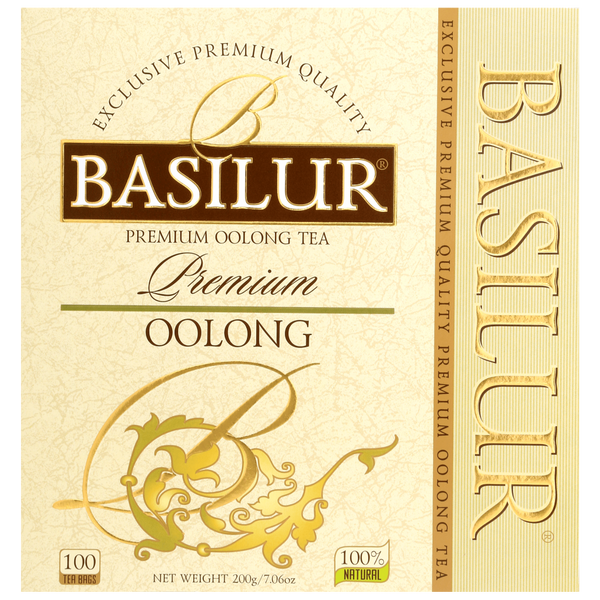
If you want to explore different variations within this category, start with Oolong teas. With oolongs, it's particularly worthwhile to experiment with temperature and successive infusions, as the same leaves often reveal different notes with each subsequent steep.
In brief: what is Oolong tea?
- Oolong is a tea made from the leaves of the same plant that produces green and black teas.
- Its character primarily results from partial oxidation and further leaf processing.
- It can be light, floral, and fresh, or more honeyed, fruity, roasted, and deep.
- A good starting point for brewing is usually around 80-95°C for 2-4 minutes.
- Many oolongs are suitable for multiple infusions.
- The manufacturer's instructions for a specific product take precedence over general rules.
What exactly does the name Oolong mean?
Oolong is a distinct category of tea, not a blend of green and black tea. The leaves undergo wilting, controlled bruising or agitation, oxidation, stopping of oxidation, rolling, and drying. The exact process depends on the style and producer.
In practice, the most important thing is that the producer controls the degree of oxidation. In green tea, oxidation is limited very early. In black tea, it is allowed to proceed much further. Oolong covers a wide range between these two approaches.
Sometimes oolong is referred to as semi-fermented tea. In commercial language, such a term is still used, but it is technically more accurate to speak of partial oxidation.
How is Oolong tea made?
There isn't one identical process for all oolongs. However, many of them go through several characteristic stages.
- Wilting - freshly picked leaves lose some moisture and become more pliable for further processing.
- Agitation or gentle bruising of leaves - helps initiate controlled oxidation, especially at the edges of the leaves.
- Oxidation - the producer observes changes in aroma and color, and stops the process at the chosen moment.
- Stopping oxidation - heating inhibits the activity of enzymes responsible for further changes.
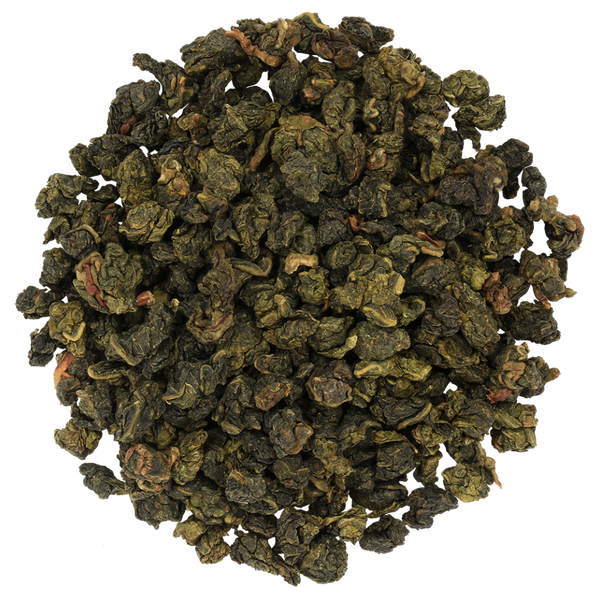
- Rolling or shaping - leaves can be twisted into long strands or rolled into compact balls.
- Drying - stabilizes the tea and prepares it for storage.
Some oolongs are additionally roasted. This stage can impart nutty, caramel, toasted, or mineral notes to the infusion and significantly change its character.
What does Oolong tea taste like?
The taste of oolong depends on the plant variety, growing region, degree of oxidation, shaping method, and potential roasting. Therefore, the description "oolong taste" is as broad as the description "black tea taste."
Lighter oolongs can have notes of:
- floral,
- fresh and green,
- creamy,
- lightly sweet,
- fruity.
More heavily oxidized or roasted styles can be associated with:
- honey,
- ripe fruits,
- nuts,
- baked grain,
- wood,
- minerality.
Many classic oolongs come from China and Taiwan. If you're interested in a broader context of origin, you can also compare them with other Chinese teas.

How does Oolong differ from green tea?
Green tea is processed to stop leaf oxidation very early. This often preserves a fresh, vegetal, marine, or slightly nutty profile, depending on the type.
In oolong, the leaves oxidize longer, but the process is stopped before reaching the level typical for black tea. This opens up a much wider palette of aromas, from fresh to deep and roasted.
However, one should not assume that every light oolong will taste like green tea. The production method is still different, and a well-made oolong usually has its own distinct, recognizable character.
How does Oolong differ from black tea?
In black tea, oxidation is carried out much further. The leaves become darker, and the infusion often has a more decisive, malty, fruity, or full-bodied character.
Oolong stops earlier and can retain more freshness and floral aromas. However, a heavily oxidized oolong can sensually approach black tea more than green tea.
Is Milk Oolong a separate type of tea?
The term Milk Oolong refers to oolongs with a creamy or milky profile, but various methods can be used to achieve such a character on the market. Some teas naturally have creamy notes resulting from the variety and processing, while others are additionally flavored.
Therefore, it's worth reading the ingredients and description of a specific product instead of assuming that every Milk Oolong is produced in exactly the same way.
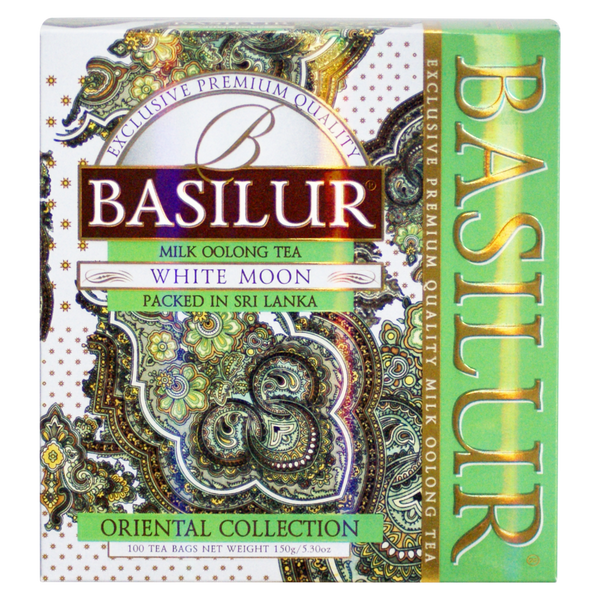
An example of a currently available tea with a milky profile is Basilur White Moon Oolong Tea - 100 g. This is a good reference point for those who want to start with a milder, creamy style.
How to brew Oolong tea correctly?
There isn't one perfect setting for all oolongs. However, a good starting point for everyday brewing is about 2-3 g of leaves per 250 ml of water, temperature 80-95°C, and brewing time 2-4 minutes.
Lighter and more delicate oolongs are often best started at the lower end of this range. More heavily oxidized and roasted styles usually handle higher temperatures well.
| Oolong Style | Starting Temperature | Starting Time |
|---|---|---|
| Light, floral | 80-90°C | 2-3 minutes |
| Medium oxidized | 85-95°C | 2-4 minutes |
| Heavily oxidized or roasted | 90-95°C | 2-4 minutes |
These are approximate values. If there are detailed instructions on the packaging, start with those, and then adjust the time and temperature to your own taste.

Why do Oolong leaves need a lot of space?
Many oolongs are rolled into compact balls. After contact with hot water, the leaves gradually unfurl and can increase in volume several times over.
Therefore, a small metal infuser ball can be inconvenient. Better results are achieved with a larger infuser, a wide sieve, or a small teapot where the leaves have free contact with the water.
This also applies to other loose leaf teas, but the difference is particularly noticeable with rolled oolongs.
Can Oolong be steeped multiple times?
Yes. Many oolongs are very rewarding for multiple infusions. The second and third infusions can reveal notes that were less apparent in the first cup.
For subsequent infusions, you can gradually lengthen the steeping time or maintain a similar temperature. If you use a larger quantity of leaves and a small vessel in the gongfu style, steeping times are significantly shorter. In an everyday cup, it's easier to stick to a simple system of a few minutes.
How many times can the same leaves be steeped?
There isn't a single number. It depends on the quality and style of the tea, the amount of leaves, temperature, and brewing method. Some oolongs yield two or three good infusions, others significantly more when steeped with small portions of water.
The best indicator is taste. If a subsequent infusion is distinctly watery and lacks aroma, the leaves have already given most of what they could offer.
How to brew Oolong using the Western method, step by step?
- Measure about 2-3 g of leaves per 250 ml of water.
- Heat the water to a temperature suitable for the tea style.
- Place the leaves in a large infuser or teapot.
- Pour water over the leaves and start timing.
- After 2-4 minutes, completely separate the leaves from the infusion.
- Taste the tea after it has cooled slightly and note what you want to change.
- For the next infusion, use the same leaves and extend the time if necessary.
What to do if Oolong is too bitter or astringent?
First, shorten the brewing time. If that's not enough, lower the temperature by a few degrees. Don't change all parameters at once, as it will be difficult to determine what actually improved the infusion.
If the tea is too weak, instead of a very long steep, try using a slightly larger quantity of leaves. This often yields a fuller aroma without excessive astringency.
How to choose Oolong to start with?
The easiest way to start is by deciding what flavor profile you are looking for.
- If you like delicate and floral teas, choose a lighter oolong.
- If you appreciate creaminess and mildness, consider a Milk Oolong style.
- If you prefer deeper, roasted notes, look for more heavily oxidized or roasted oolongs.
- If you want to observe the unfurling of leaves, choose loose leaf tea instead of tea bags.
Another example for comparison is Basilur Stone Oolong Green Tea - 75 g. Comparing two different products helps to quickly realize how broad this category is.
Common mistakes when brewing Oolong
Assuming every Oolong requires the same temperature
The category is too broad for one universal number. A light oolong may need a gentler approach than a heavily roasted one.
Using too small an infuser
Rolled leaves need space to unfurl. A tight infuser restricts contact between the leaves and water and makes even brewing difficult.
Discarding leaves after the first infusion
For many oolongs, subsequent infusions are one of the most interesting parts of the tasting experience.
Steeping for too long to get a stronger taste
Long brewing time can increase astringency. Often, a better solution is to increase the amount of leaves and maintain a reasonable steeping time.
FAQ
Is Oolong a green or black tea?
It is neither green nor black tea. Oolong is a separate category with a partial degree of oxidation, which can vary greatly depending on the style.
Does Oolong contain caffeine?
Yes. Oolong is made from true tea leaves, so it naturally contains caffeine. The amount in a cup depends, among other things, on the amount of dry tea, temperature, and brewing time.
What temperature should Oolong be steeped at?
A good starting point is around 80-95°C. Lighter styles are often best started at a lower temperature, while more heavily oxidized or roasted ones are better at a higher temperature.
How many minutes should Oolong be steeped for?
For everyday brewing, it's usually best to start with about 2-4 minutes. Then adjust the time to the specific product and your own taste.
Can Oolong be steeped with boiling water?
Some more heavily oxidized and roasted oolongs handle very hot water well, but for many more delicate styles, a temperature below boiling will be better.
Does Milk Oolong contain milk?
The name does not automatically imply the presence of milk. It can refer to a creamy aromatic profile, and some products are additionally flavored. It's always worth checking the ingredients of a specific tea.
Can Oolong be drunk without additives?
Yes. This is the best way to experience its natural profile. You can introduce additives later if that method of drinking suits you better.
Why are Oolong leaves rolled into balls?
This is a result of the shaping method during production. During brewing, the leaves gradually unfurl, which is why they need relatively much space in the infuser.
Summary
Oolong is one of the most diverse categories of tea. Partial oxidation and various processing methods mean it can be light and floral, creamy, fruity, or heavily roasted. The best way to get to know this tea is to try several styles and brew them in a controlled manner.
Start with about 80-95°C and 2-4 minutes, then change one parameter at a time. Give the leaves plenty of space and don't discard them immediately after the first infusion. It's often during subsequent infusions that oolong reveals the most interesting differences.