akcesoria do herbaty
How do you cool down water for green or white tea without a thermometer?
How do you cool down water for green or white tea without a thermometer? Discover simple methods: waiting, pouring between vessels, and mixing hot water with cooler water.
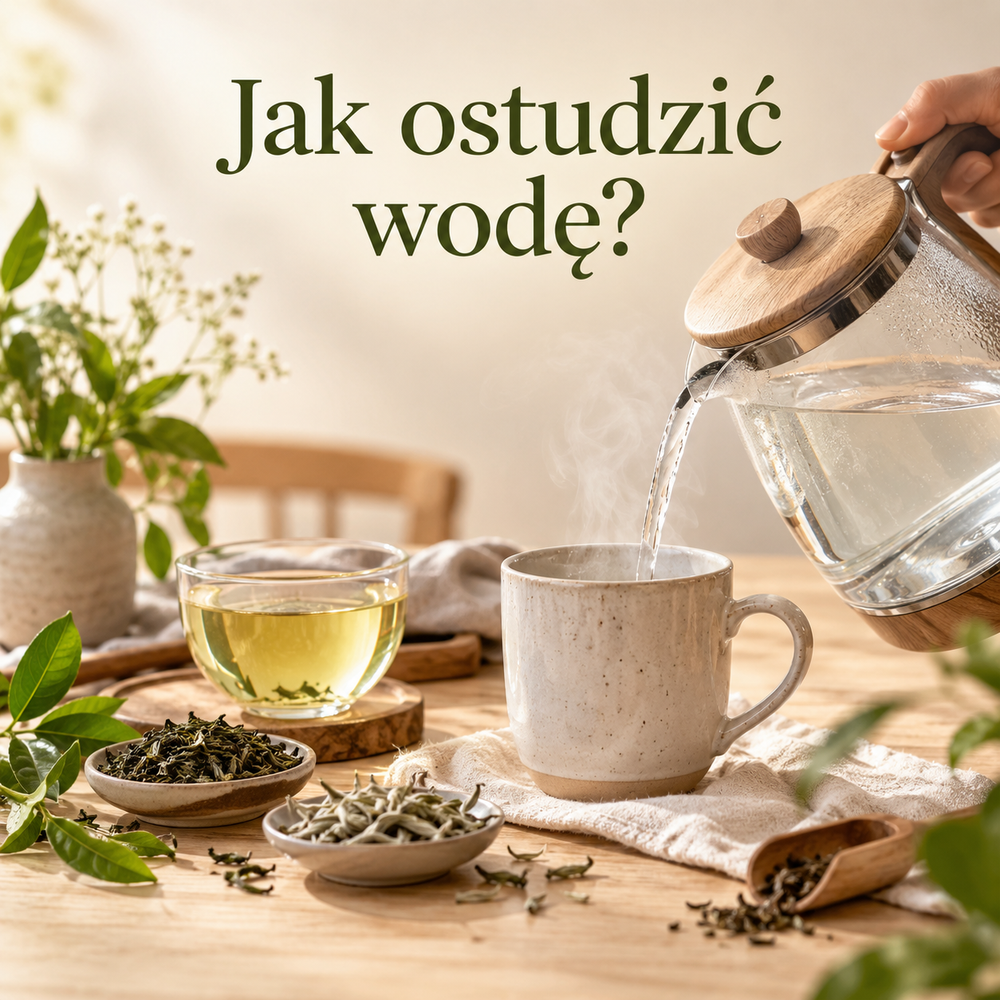
For green and white tea, it is not always worth using water straight after it has boiled. If you do not have a temperature-controlled kettle or a thermometer, you can still easily lower the water temperature using a few simple methods. The most important thing is to treat these as practical and approximate methods, because the cooling rate depends on the amount of water, the vessel, and the room temperature.
The simplest solutions are waiting after boiling, pouring the water into a cool vessel, or mixing the hot water with a small amount of cooler, good-quality water. Thanks to this, you can prepare a more delicate brew without extra equipment.
In brief
- Do not automatically use boiling water for delicate green or white tea if the manufacturer recommends a lower temperature.
- After boiling, you can pour the water into a second vessel, which speeds up its cooling.
- You can also wait a few minutes, but the exact time depends on the kettle, the amount of water, and the environment.
- If you want to achieve a more repeatable result, use proportions of hot and cold water instead of relying solely on time.
- Always start with the brewing instructions provided for the specific tea.
Why does water temperature matter?
Temperature affects the extraction rate of components from the leaves. The hotter the water, the faster compounds responsible for taste, aroma, bitterness, and astringency pass into the infusion. Therefore, green tea brewed with water that is too hot can turn out significantly sharper than the same tea prepared at a lower temperature.
For many green teas, a good starting point is water that is clearly cooler than boiling. White teas also often benefit from gentler brewing, especially if you care about a subtle aroma.
The simplest method: boil and wait
If you do not have any additional vessel, simply boil fresh water and leave it for a while in an open kettle. This is the easiest method, but also the least precise.
It is not worth memorizing one rigid number of minutes as a universal rule. A liter of water in a well-insulated kettle will cool differently than 300 ml in a thin metal vessel. Over time, however, you can develop a repeatable way for your own kettle by always using a similar amount of water.
How to do it practically?
- Boil only as much fresh water as you need.
- After turning off the kettle, open the lid if the design safely allows it.
- Wait a while and only then pour the water over the tea.
- If the brew is too bitter or astringent, increase the cooling time during the next brewing.
- If the taste is too weak, you can use slightly warmer water next time.
The method of pouring water between vessels
Pouring boiling water from a kettle into a cold or room-temperature mug, teapot, or second vessel removes some heat from the water. Pouring it again lowers the temperature even more. This is a convenient way when you want to prepare green or white tea faster.
The method is especially practical because it does not require timing. You can, for example, pour the water first into the mug in which you will later brew the tea, and then into the infuser or teapot. By the way, you will warm the vessel, but the water will no longer be at the temperature immediately after boiling.
Remember that the effect depends on the material. Thick ceramic will absorb more heat than pre-warmed glass, so it is best to use a similar set of vessels each time.
The method of mixing hot and cold water
If you want to achieve a more repeatable result without a thermometer, you can mix freshly boiled water with room-temperature water. This method is easy to remember but requires using water suitable for drinking.
For example, assuming that boiling water is about 100°C and room-temperature water is about 20°C, a mixture of three parts hot water and one part cool water gives approximately 80°C. Two parts hot and one part cool give about 73°C. In practice, the temperature will be slightly different due to heat loss and the temperature of the vessels, so treat these proportions as approximate.
Example for a mug of about 300 ml
- about 225 ml of freshly boiled water + 75 ml of room-temperature water gives approximately 80°C,
- about 200 ml of freshly boiled water + 100 ml of room-temperature water gives approximately 73°C.
It is best to use the same filtered or bottled water for both parts so as not to unnecessarily change the taste of the brew.

How to cool water for green tea?
Not all green teas require the same temperature. Delicate sencha may taste better with cooler water than a more robust flavored blend. That is why it is always worth checking the instructions on the packaging.
If you do not have a thermometer, start by pouring the water once into a cool vessel or by using a mixture of hot and cooler water. Then evaluate the result by taste. If the tea is aggressively bitter, use cooler water or shorten the time next time.
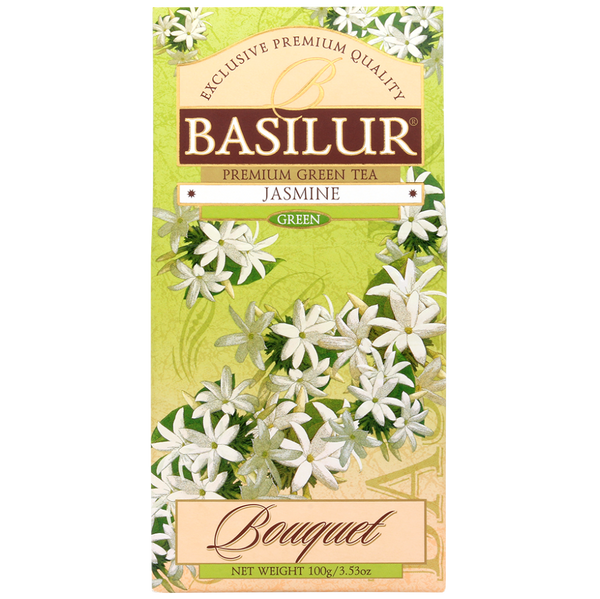
You can use the classic Basilur Jasmine Green Tea - 100 g for testing. If you want to better understand the relationship between temperature and bitterness, the guide on how to brew green tea so it is not bitter will also be useful.
How to cool water for white tea?
White teas can be delicate, and their large leaves unfurl more slowly than fine black tea leaves. If the manufacturer recommends a temperature below boiling, it is most convenient to pour the water into a second vessel and wait a while or use the water mixing method.
An example of a classic tea from this category is Basilur Chinese Collection White Tea - 100 g. With such leaves, it is worth observing not only the temperature but also the brewing time and the amount of leaves.

Can you add cold water after brewing?
You can, but it is a different situation. If you want to control extraction, it is better to lower the temperature before the water comes into contact with the leaves. Adding cold water to a finished, too-strong brew may reduce its temperature and intensity, but it will not reverse the compounds that have already been extracted during brewing.
Therefore, for green and white teas, it is better to prepare the right temperature beforehand than to try and save the brew after a few minutes.
Can you use an ice cube?
Technically yes, but it is difficult to maintain repeatability. Ice cubes have different sizes and they also dilute the water as they melt. For daily brewing, it is more convenient to mix a measured amount of cool water with hot water.
Ice can make sense if you just want to quickly lower the temperature and do not mind a small change in water proportions. Use ice made from good-quality water.
How to identify the right temperature without measuring?
There is no foolproof visual way to recognize a specific temperature with an accuracy of a few degrees. Popular tips about the size of bubbles in the water may help while heating, but after boiling and cooling, they are less useful.
The most practical approach is to find a repeatable procedure: always the same amount of water, the same kettle, the same vessel, and the same pouring method. After a few tries, it is easy to remember which method yields the best taste for your favorite tea.
What to do if the tea is still bitter?
Temperature is only one of the parameters. If the brew is still too bitter or astringent, also check:
- if you are not using too much tea,
- if the brewing time is not too long,
- if the leaves have enough space,
- if the water is not very hard or intense in taste,
- if the instructions for the specific tea do not recommend an even lower temperature.
It is best to change one parameter at a time. This will allow you to quickly determine whether the problem was the temperature, the time, or the amount of tea.
Common mistakes when cooling water
- Sticking to one number of minutes for every kettle. Water cools at different rates depending on the volume and the vessel.
- Using random cold water. Use water for mixing that you would normally use for tea.
- Lack of repeatability. If you cool a liter one time and 250 ml another time, the result after the same time will be different.
- Focusing only on temperature. Brewing for too long can still produce a bitter brew even with cooler water.
- Pouring boiling water over leaves and immediately adding cold water. The first seconds of contact with very hot water already begin fast extraction.
FAQ
How long should you wait after boiling water for green tea?
There is no exact number of minutes, because the cooling rate depends on the amount of water, the kettle, and the room temperature. It is better to develop a constant procedure for your own equipment or use pouring between vessels.
Does pouring water into a mug really cool it down?
Yes. Cooler vessel walls absorb some of the heat, and greater contact of the water with the air further accelerates cooling.
Can you mix boiling water with room-temperature water?
Yes, provided both waters are of good quality and safe to drink. This is a simple way to achieve a lower temperature without a thermometer.
What proportion gives about 80°C?
Assuming a simplified 100°C for boiling water and 20°C for room-temperature water, three parts hot water and one part cool water give about 80°C. In real conditions, the result will be slightly different.
Can white tea be poured over with boiling water?
Some white teas may handle higher temperatures well, but many products have their own recommendations. It is safest to start with the manufacturer's instructions and only then adjust the brewing method.
Is it possible to brew tea repeatably without a thermometer?
Yes. Just use the same amount of water, the same vessel, and the same cooling method. A repeatable procedure is more important than trying to guess the temperature to the exact degree.
Summary
For green or white tea, you do not need a thermometer to avoid pouring boiling water over the leaves. You can wait after boiling, pour the water into a cool vessel, or mix hot water with a measured amount of room-temperature water.
The most important thing is maintaining repeatability and observing the taste. If the tea turns out too bitter, try cooler water or shorter brewing. Over time, you will easily find a simple method tailored to your own kettle and your favorite green teas and white teas.