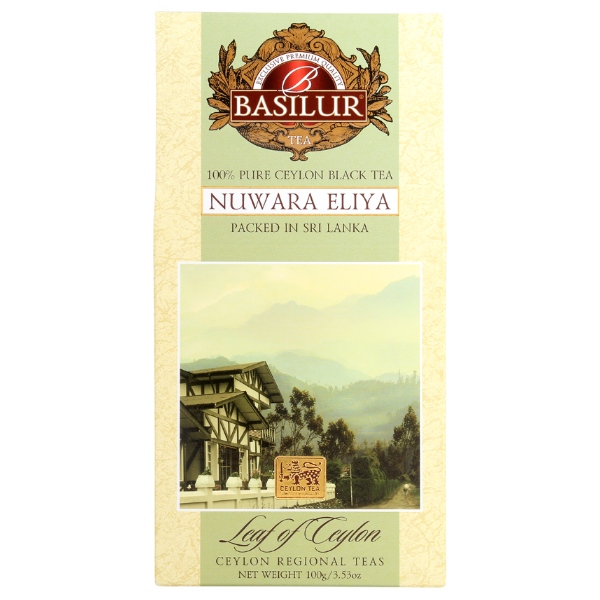
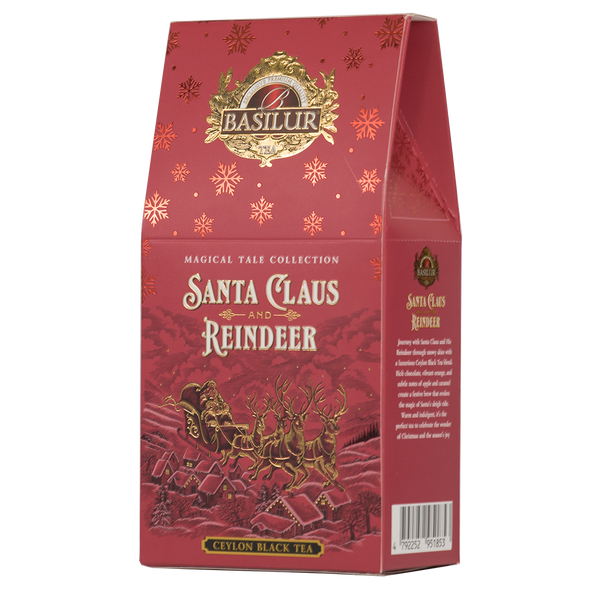
herbata liściasta
How to choose a good loose leaf tea to start with? 7 simple criteria
How to choose your first loose-leaf tea and not get lost among varieties, additives, and brewing methods? Discover simple criteria that will help you select the right flavor, type of tea, and suitable tea to start with.
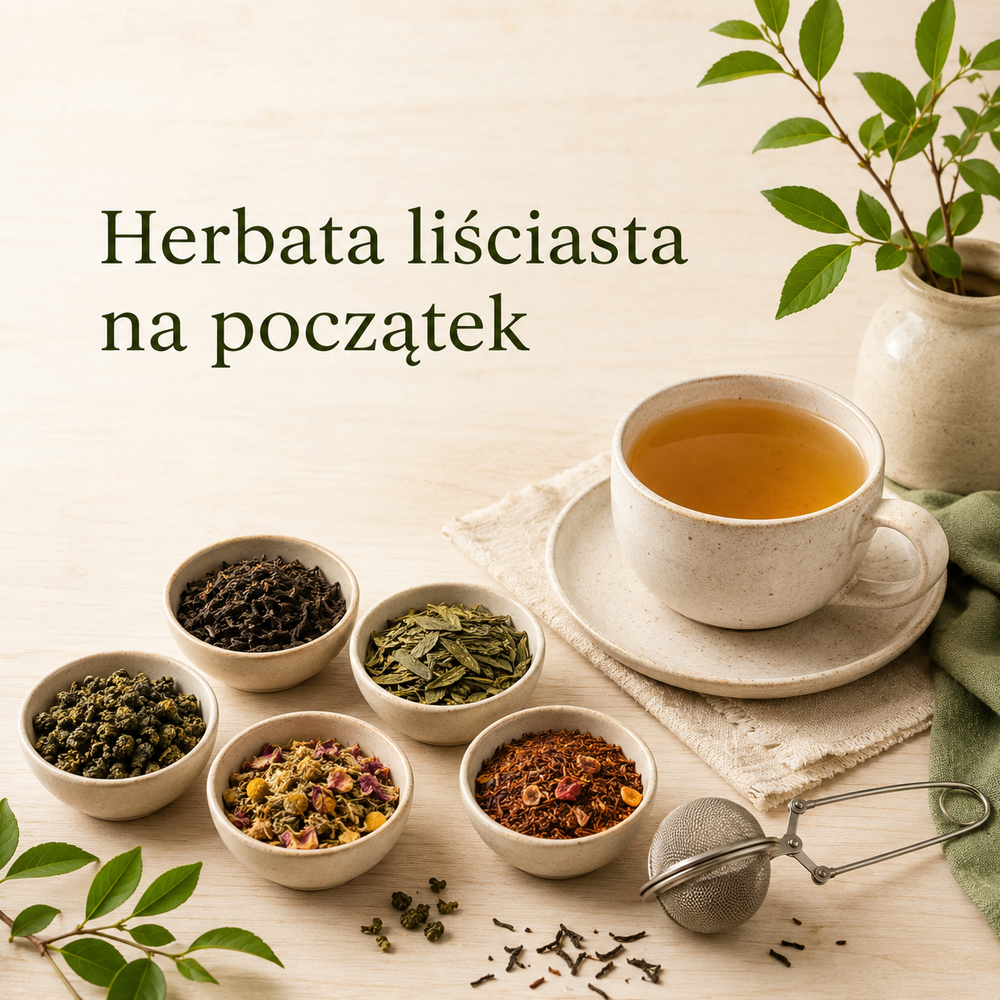
Your first purchase of loose leaf tea doesn't have to mean choosing from dozens of varieties, regions, and designations. To start, taste, simple ingredients, clear information about the tea, and ease of brewing are far more important.
Good loose leaf tea for beginners should have a taste that matches your preferences, a distinct and fresh aroma, clear ingredients, and uncomplicated brewing requirements. For many, a good first choice will be classic black tea, Earl Grey, or delicate green Sencha.
If you're just transitioning from tea bags to loose leaf, it's also worth understanding the differences between these two brewing methods.
In short: what loose leaf tea is good for a start?
Initially, pay attention to seven things:
- choose a type of tea that matches the taste you already like,
- check if the ingredients are simple and understandable,
- evaluate the appearance and aroma of the dried leaves,
- choose a tea that is easy to brew correctly,
- don't be guided solely by terms like "premium" and "highest quality",
- start with a small package,
- buy one or two distinctly different teas and compare them.
If you want to narrow down your choice to products suitable for a first purchase, a good starting point is the collection of teas for beginners.

1. Start with a taste you already know
The most common mistake beginners make is choosing tea based on its name, origin, or other people's opinions. Meanwhile, the most important question is: what flavors do you like?
If you've mostly been drinking classic breakfast tea, a natural starting point will be black loose leaf tea. If you like the citrus aroma of Earl Grey, you don't have to immediately switch to delicate white teas or more demanding oolongs.
Black tea for beginners
Black tea is usually easy to prepare and yields an intense, well-recognized brew. It's a good choice for those who enjoy a bold flavor and want to start their journey with loose leaf tea without complicated brewing.
It's worth starting with classic blends like English Breakfast or pure Ceylon tea.
A good example is Basilur English Breakfast Black Tea - 100 g, which represents the classic style of loose leaf black tea.
More similar options can be found among loose leaf black teas.
Earl Grey, if you like aromatic teas
If classic black tea seems too plain to you, a good first step might be Earl Grey. The characteristic bergamot note makes the taste easy to recognize and often familiar to people who previously drank tea from sachets.
To start, you can choose Basilur Earl Grey Black Tea - 100 g.
Green tea for beginners
If you prefer lighter, fresher, and more vegetal flavors, it's worth trying green tea. A good starting point can be Sencha.
However, it's important to remember that green tea requires slightly more control over water temperature. Pouring boiling water over it and steeping it for too long can result in excessive bitterness.
One suggestion for a start is Basilur Sencha Tea - 100 g.
More such suggestions can be found in the collection of loose leaf green teas.
2. Check the tea ingredients
Good tea doesn't have to have a single ingredient. Blends with fruits, spices, or flavors can be a very pleasant choice to start with.
However, it is important that the ingredients are clearly described.
Before purchasing, check:
- what type of tea forms the base of the blend,
- what additives are in the dried leaves,
- whether the tea is flavored,
- whether the ingredients match what you expect from the taste.
If you want to learn to recognize the character of the leaf itself, teas without additives will be a good choice.
However, if you are primarily interested in a pleasant aroma and an easy entry into the world of loose leaf teas, a flavored blend can be an equally good starting point.
Good to know: tea without additives is not automatically better than flavored tea. They are simply two different styles of brew intended for different preferences.
3. Examine the dry leaves
The appearance of the leaves can tell a lot about the tea, but it's not worth applying one rule to all types.
Large, whole leaves may look impressive, but finer loose leaf tea can also produce a very good brew. Some teas are intentionally rolled, broken, or shaped during production.
Initially, pay attention primarily to whether:
- the dry leaves look dry and fresh,
- there are no accidental contaminants in it,
- the aroma is distinct and pleasant,
- the individual elements of the blend match the product description.
Do not judge quality solely on the size of the leaves.
4. Smell the tea before brewing
The aroma of the dry leaves is one of the simplest ways to assess a product.
Good tea should smell distinct and clean. The nature of the scent, of course, depends on the type of tea. Black tea can have malty, honey, woody, or fruity notes, while green tea can be associated with vegetation, fresh leaves, or a delicate sweetness.
However, the following smells can be unsettling:
- musty,
- damp,
- stale,
- completely lacking in character.
In the case of flavored teas, the aroma may be more intense, so it's worth evaluating the brew as well, not just the dry leaves.
5. To start, choose a tea that is easy to brew
Your first loose leaf tea shouldn't require perfect technique.
If the brew becomes very bitter after a few seconds of steeping too long, it can be harder for a beginner to achieve a consistent result.
The most practical teas will be those for which you only need to remember three parameters:
- amount of dry leaves,
- water temperature,
- brewing time.
Simple brewing parameters for a start
| Type | Approximate temperature | Approximate time |
|---|---|---|
| Black tea | 90-95°C | 3-4 min |
| Green tea | 70-80°C | 2-3 min |
| White tea | 75-85°C | 3-5 min |
| Oolong | 85-95°C | 2-4 min |
| Fruit and herbal | 95-100°C | 5-8 min |
As a starting point, you can assume about 2-3 g of dry leaves per 200-250 ml of water, and then adjust the portion to your own taste.
More detailed rules for different types of tea can be found in a separate brewing guide.
The most important conclusion: if the tea seems too strong, instead of immediately giving up on that type, shorten the brewing time or reduce the portion of dry leaves.
6. Don't buy a large package just because it's cheaper
Initially, you are just getting to know your preferences. A large package may have a more attractive price per 100g, but it won't be a good purchase if, after two cups, you discover that you don't like the taste.
It's much more sensible to choose a few smaller packages and compare:
- black tea without additives,
- flavored black tea,
- green tea,
- possibly one more unusual variety.
After a few tastings, you'll be able to determine more easily in which direction you want to develop your interest in tea.
7. Don't treat the word "premium" as a guarantee that you'll like the tea
Marketing terms can provide some information about product positioning, but they do not replace your own judgment.
A tea can come from a respected region, have impressive leaves and elegant packaging, and still not suit your preferences.
For a beginner, the following are more important:
- type of tea,
- flavor profile,
- ingredients,
- freshness,
- storage method,
- ease of brewing.
If you are interested in a more classic direction, it is also worth reading the guide “What first premium tea? Opt for classic Ceylon black tea”.
How to choose loose leaf tea step by step?
If you're standing in front of a shelf or browsing an online store, you can use a very simple scheme.
Step 1. Choose a basic flavor
Consider whether you prefer an infusion that is:
- strong and classic,
- light and vegetal,
- citrusy,
- fruity,
- spicy,
- delicate and subtle.
Step 2. Check the type of tea
For most beginners, black or green tea will be the easiest start.
Step 3. Read the ingredients
If you're buying a blend, make sure you know what additives influence its taste.
Step 4. Check brewing recommendations
The simpler and clearer the instructions, the easier it is to get a good first brew.
Step 5. Start with a small amount
Don't immediately build up a large stock of one type of tea.
Step 6. Write down what you liked
Three short pieces of information are enough:
- too strong or too delicate,
- more tart or milder,
- a taste you want to revisit or one you'd rather avoid.
After a few teas, you'll start to notice your own preference profile.

Common mistakes when choosing your first loose leaf tea
Buying the most expensive tea in the store
Price does not guarantee that a specific flavor profile will be suitable for a beginner.
Choosing based solely on packaging appearance
Packaging protects the product and can facilitate storage, but the choice should primarily be determined by type, ingredients, and taste.
Buying a very demanding tea for the first time
Some teas only show their full potential with precise control of temperature, time, and proportions. Initially, a simpler tea allows you to learn the basics more easily.
Pouring boiling water over every tea
This is a particularly common problem with green teas. Water that is too hot can increase the astringency of the brew.
Considering the first unsuccessful cup as proof of poor quality
Sometimes it's enough to change the temperature, the amount of tea leaves, or the brewing time.
Do you need special equipment?
No. To start your loose leaf tea adventure, you only need:
- a mug or teapot,
- an infuser that provides enough space for the leaves,
- a regular kettle,
- a teaspoon or a small kitchen scale.
A thermometer is helpful for green and white teas, but initially you can also simply wait a moment after boiling the water.
The most important thing is that the leaves can unfurl freely and that they can be separated from the brew after brewing is complete.
Recommended teas for beginners
If you don't know which direction to choose yet, it's worth comparing three different styles.
Basilur English Breakfast - a classic start
Basilur English Breakfast Black Tea - 100 g will be suitable for those looking for a traditional, distinct black tea flavor.
Basilur Earl Grey - for those who like citrus aroma
Basilur Earl Grey Black Tea - 100 g allows you to start with the familiar combination of black tea and bergamot.
Basilur Sencha Tea - the first step towards green teas
Basilur Sencha Tea - 100 g will be a good reference point for those interested in the fresher and lighter profile of green tea.
If you want to compare more suggestions, see the entire collection prepared for those starting their tea adventure.
FAQ
What loose leaf tea is best for beginners?
For most beginners, classic black tea, Earl Grey, or mild green Sencha are good choices. They are readily available, have a distinctive taste, and allow you to quickly learn the differences between basic types of tea.
Is black tea good for beginners?
Yes. Black tea is a good choice to start with because it is usually easy to brew correctly and yields a distinct infusion. English Breakfast or pure Ceylon tea can be a good starting point.
Is green tea suitable as a first loose leaf tea?
Yes, especially if you like light and vegetal flavors. However, remember not to brew it with boiling water and not to steep it for too long.
How much loose leaf tea to use for one mug?
A good starting point is about 2-3 g of dry leaves per 200-250 ml of water. The proportion can then be increased or decreased depending on the desired intensity.
Do large leaves mean better tea?
Not always. Leaf size depends on the type and production method of the tea. Large, whole leaves can be an indicator of a particular style, but they are not a universal measure of quality.
Is tea without additives better for beginners?
Tea without additives helps to understand the natural character of the leaf, but it is not a mandatory choice for starters. If you like fruity, citrus, or spicy aromas, a blend with additives can be an easier and more pleasant beginning.
Do you need a scale for tea?
No, but a small kitchen scale makes reproducible brewing easier. Initially, you can also use a teaspoon and gradually adjust the amount of dry leaves to your own taste.
Why does loose leaf tea turn out bitter?
The most common causes are too high water temperature, too much dry tea, or too long brewing time. This applies especially to green and more delicate teas.
Summary
Good loose leaf tea to start with doesn't have to be rare, expensive, or complicated. The best first choice is one that matches your taste preferences and allows you to easily prepare a consistent brew.
Start with one or two proven styles, such as classic black tea and green Sencha. Compare the taste, aroma, and brewing method, and your next purchases will be much easier.
If you want to see suggestions selected for initial tastings, compare teas for beginners and choose the flavor you want to start with.