Tea knowledge center
How to choose the size of a teacup and teapot? 250, 350, 500 ml or 1 liter?
Choose a cup and jug based on the number of people and the portion size. We compare 250, 350, 500, 600 ml and 1 litre and explain the usable capacity.
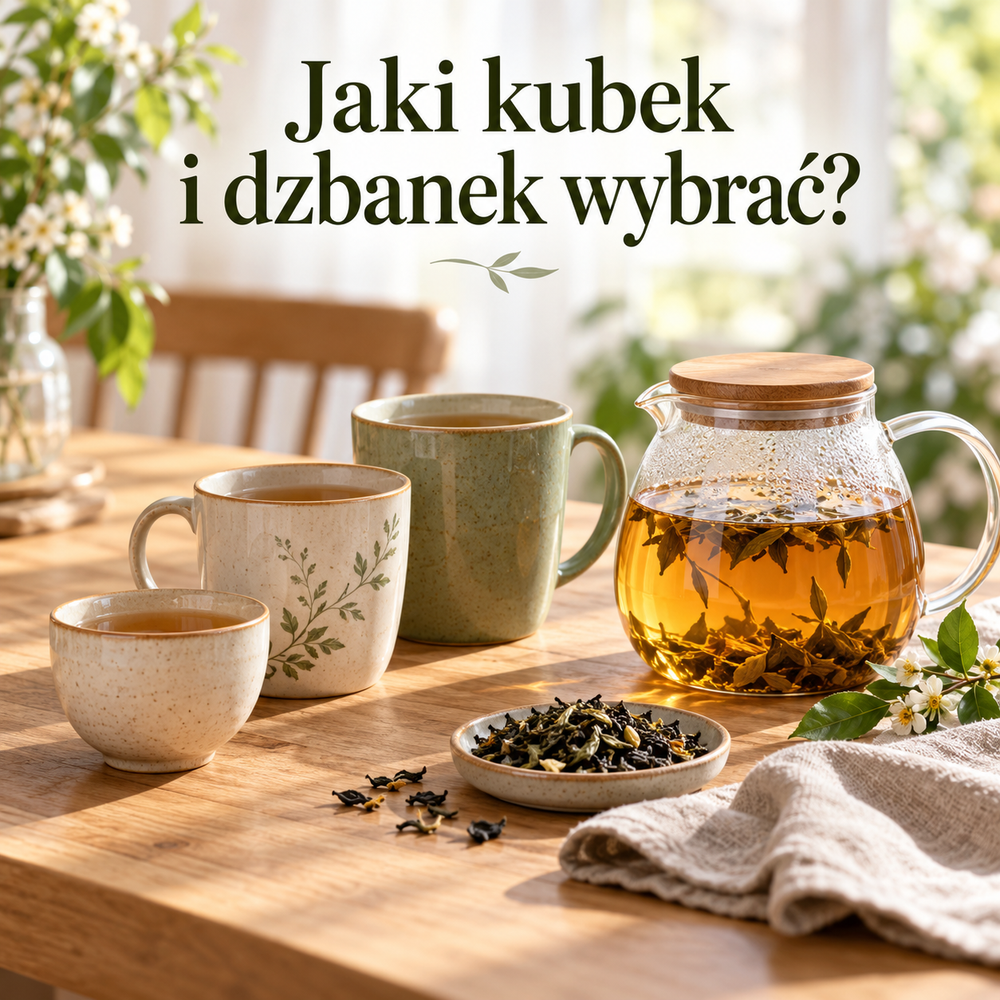
The best capacity for a mug or teapot depends on the number of people, the size of a single serving, and the brewing method. A 250 ml mug is ideal for a short tea break, 350–450 ml for daily drinking, and a 600 ml teapot allows you to prepare tea for two. A 1-liter teapot is convenient for gatherings, but it does not automatically mean four full quarter-liter servings.
When choosing a vessel, it is easy to confuse the catalog capacity with the amount of tea you can actually pour comfortably. The space on the list, the infuser, the lid, and whether you prefer one large tea or several smaller ones also matter. The following guide shows how to choose the right size without buying a vessel that is too large.
In short: which size should you choose?
- 250 ml: a good capacity for one shorter serving or a small teacup.
- 350 ml: a convenient size for a daily mug for one person.
- 400–500 ml: a larger mug for someone who likes to sip one tea for a long time.
- 600 ml: a compact teapot for about two standard teacups.
- 950–1000 ml: a teapot for several servings during a gathering or for pouring tea in stages.
These are approximate scenarios, not rigid rules. A teapot described as 1000 ml is not always intended to be filled to the brim. Therefore, before you calculate the servings, check the usable capacity and leave room for safely carrying the vessel.
Nominal vs. usable capacity—why does it matter?
The packaging shows 350, 500, or 1000 ml. This is usually the capacity declared by the manufacturer, but the way it is measured may vary. During daily use, you usually leave free space below the rim. If the vessel has a strainer or basket, it may partially occupy the center and affect the ease of pouring.
There is no single mandatory reserve for all mugs. In practice, it is worth starting by filling the vessel with water to a level at which it can be safely lifted and carried, and then measuring that amount with a measuring cup. It may turn out that from a mug declared as 450 ml, you comfortably drink about 380–420 ml. Such a check is more useful than comparing the numbers in the product names alone.
250 ml mug—who will it be suitable for?
A small mug or a larger teacup with a capacity of about 250 ml is suitable for a short break, tasting, and people who prefer to prepare fresh tea more often. A smaller portion is easier to drink before the tea cools down. If you are trying several different teas in a row, a small vessel allows you to avoid preparing large quantities that you do not feel like drinking.
The size of the infuser may be a limitation. For tea with rolled or large leaves, appropriate space is needed, even if the amount of water is small. A small, tight strainer will not always be a good choice. If you like oolong or white teas, do not rely solely on the mug's capacity.
350 ml mug—a practical size for everyday use
About 350 ml is a compromise between the size of the portion and the convenience of holding the vessel. Such a mug often suits morning tea, working at the computer, and a short break at home. It does not require as much water as the 500–650 ml models, while at the same time providing more tea than a classic teacup.
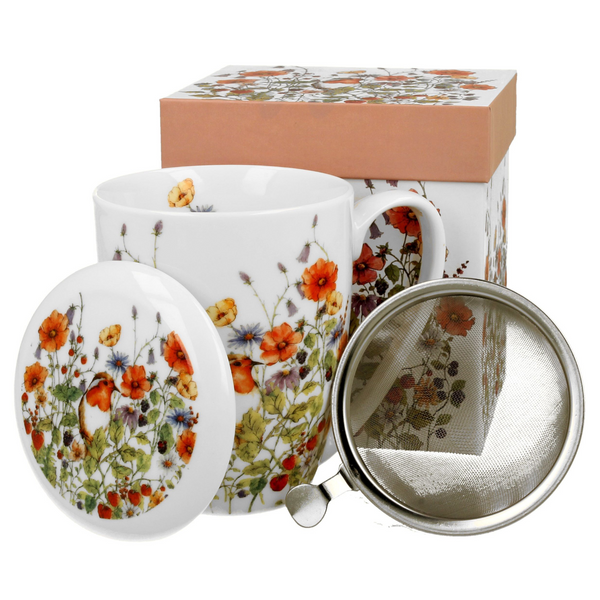
A good real-life reference point is the Porcelain mug with infuser Wild Bird - 360 ml. It has a metal infuser, so it allows you to conveniently separate the leaves from the finished tea. This is an example of a single-serving vessel in which the capacity itself goes hand in hand with practical equipment.
When purchasing, also check the diameter and height of the mug. Two models with similar capacity may feel completely different in the hand. If you use a lid, the ability to safely set it aside and make room for the removed strainer counts.
400–500 ml mug—when does a larger model make sense?
A large mug is good for people who drink tea slowly over a long period. It works well at the desk, while reading, or when you do not want to return to the kettle often. However, it is worth remembering that a larger portion may cool down differently than a smaller one, and leaves left in it for too long may excessively change the flavor.
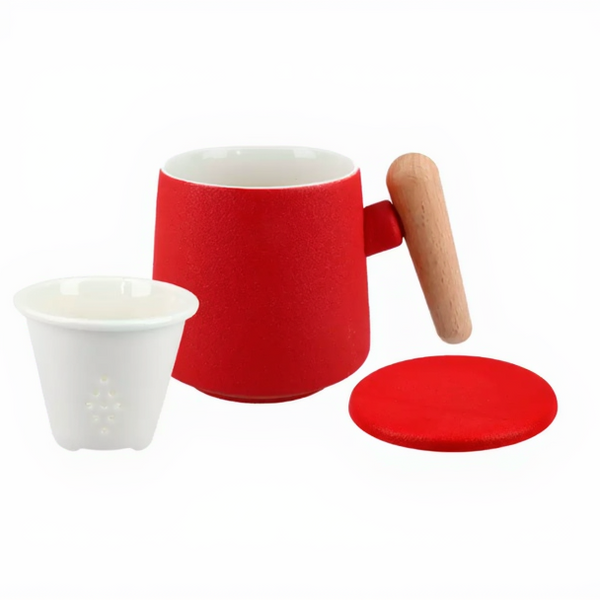
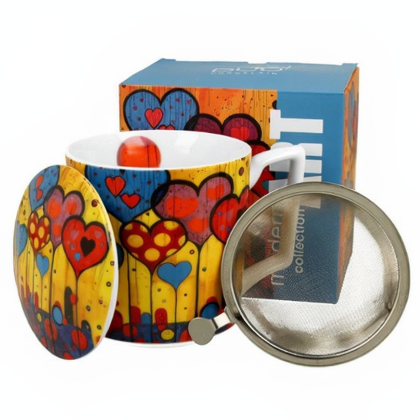
Ceramic mug with strainer and lid Red - 400 ml is an example of a solution in which you have a strainer and lid right away. In turn, the Porcelain mug with infuser Modern Hearts - 450 ml has a capacity close to a half-liter portion as well as a separate infuser and lid. However, you do not always need to fill the mug to the brim.
If you usually drink only 200 ml, choosing a very large mug may be less convenient than it seems in the photo. On the other hand, when working from home, additional capacity can be practical. The best size comes from a daily habit, not from the belief that a larger mug is always better.
600 ml teapot—for one or two people?
A teapot of about 600 ml is a good choice when you want to prepare two smaller or two standard portions. It also works for one person who likes to pour tea into a teacup twice instead of drinking everything from a large mug. It is important to separate the leaves from the tea after brewing if the manufacturer recommends a specific time.
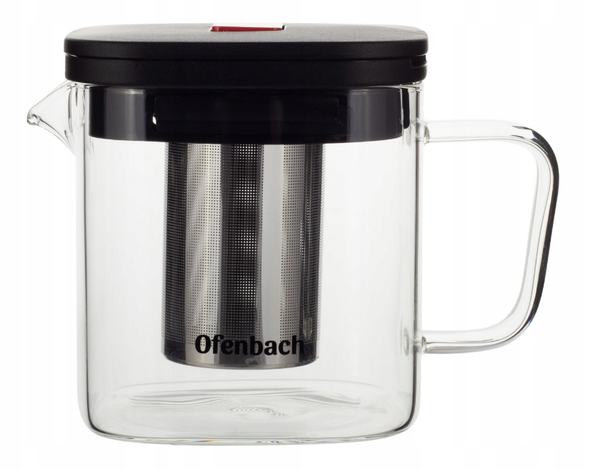
An example is the Glass teapot with tea and herbal infuser - 600 ml. It has a steel infuser and a lid. Such a set makes preparing a portion for two people not require two separate strainers. Before pouring, check the actual amount of finished tea after removing the basket.
Not every 600 ml teapot will be sufficient for two people who like very large mugs. If both people expect 350–400 ml each, a larger vessel or two infusions will be needed.
1-liter teapot—how many teacups will you prepare?
A one-liter teapot is often enough for three or four smaller portions. The result depends on the size of the teacups and on how much tea can actually be safely poured. With three teacups of 250 ml each, you need 750 ml. With four of 250 ml each, you will use the entire liter without any margin. Therefore, when serving four people, it is more convenient to assume smaller portions or a larger teapot.
Glass teapot with infuser and lid - 1000 ml is a real example of a one-liter vessel with a steel infuser. Its capacity is convenient for preparing one portion of tea for several people, but it does not automatically solve the temperature problem during a long meeting.
Table: 250, 350, 500, 600, and 1000 ml in practice
| Declared capacity | Example of use | What to watch out for? |
|---|---|---|
| 250 ml | One smaller tea, tasting | Do not overfill the small strainer |
| 350–360 ml | One daily, convenient portion | Check if the mug is comfortable to hold |
| 400–500 ml | Large tea for work or reading | Remove the infuser after the recommended time |
| 600 ml | Two smaller teacups or several refills for one person | May be too small for two large mugs |
| 950–1000 ml | Three or four smaller portions for serving | Consider the safe filling level |
These are practical suggestions, not a promise of a specific number of teacups in every model. If you want to plan a meeting precisely, measure the capacity of the vessels you use and count the actual portions.

Does the size of the vessel affect the taste of the tea?
The size of the mug itself does not make the tea better or worse. What is more important is the proportion of the amount of leaves to the actual amount of water. If you put the same amount of tea into a 450 ml mug as into a 200 ml teacup and fill it to the brim, the infusion may turn out weaker. If, on the other hand, you prepare a liter of tea, measure the portion of dry tea for a liter, not for one teacup.
The tips from the article about loose tea proportions are helpful. It is not worth assuming a rigid number of teaspoons for all types, because fine black leaves and large, rolled oolongs differ in the volume of the dry tea.
What infuser should you choose for the capacity of the mug or teapot?
The infuser should fit the diameter and depth of the vessel, but the most important thing is the space it leaves for the leaves. After contact with water, some teas, especially oolongs, clearly increase in volume. A too small basket makes it difficult to brew evenly, even if the mug is large.
For models with an integrated infuser, check if it can be easily removed without spilling the tea. For teapots, make sure the strainer reaches deep enough when brewing less than the full capacity. A person who often prepares only half a teapot may need a different basket than someone who always pours a liter.
How to choose the capacity for a daily situation?
Tea at the desk
A 350–450 ml mug is often enough for one break. If you work for a long time and do not want to carry the drink in an open vessel, check the lid and the possibility of conveniently setting aside the infuser. Very large mugs can be heavy after filling.
Home tasting
Choose smaller, similar teacups. This makes it easier to arrange samples of different teas and notice subtle differences without drinking large quantities. In tasting, a constant proportion is more important than impressive capacity.
Tea for two
A 600–750 ml teapot will usually be more convenient than two separate mugs if you are drinking the same tea. With two portions of 300 ml each, remember, however, that the nominal capacity of 600 ml may not leave a comfortable margin for pouring.
Meeting with family or friends
A teapot of about 1 liter allows you to serve several smaller teacups. If each person drinks a large mug, prepare a larger vessel or a second infusion. It is also worth thinking about separating the leaves from the water so that the last portion is not significantly stronger than the first.

Most common mistakes when choosing capacity
Buying the largest vessel just in case
A one-liter mug may look attractive, but for someone drinking small portions, it is often inconvenient. Greater capacity means more hot water, higher weight, and greater requirements for stable placement.
Counting the full capacity as ready portions
A 1000 ml teapot does not have to give exactly four safely poured mugs of 250 ml each. When planning, it is worth leaving a reserve and considering the construction of the vessel and the strainer.
Choosing the amount of dry tea according to the vessel's name
If you pour only 300 ml into a 450 ml mug, measure the tea for 300 ml of water. It is the actual volume of the infusion, not the number on the mug's label, that should be the reference point.
FAQ - mug and teapot capacity
Is a 250 ml mug too small for loose tea?
No. It can be convenient for one small portion. It is important that the infuser provides the leaves with appropriate space and can be removed after brewing.
What mug capacity is the most universal?
For many people, a mug of about 300–400 ml will be practical. The final choice depends on how large portions you usually drink.
Does a 500 ml mug require twice as much tea as 250 ml?
If you pour twice as much water and want to maintain a similar concentration, the amount of dry tea also usually needs to be increased accordingly. However, always check the recommendations of the specific product.
How many people will a 600 ml teapot serve?
Usually two people drinking smaller teacups. For two large mugs, a teapot with a larger capacity may be better.
How many teacups can be poured from a 1-liter teapot?
With teacups of about 200–250 ml, most often three or four smaller portions, depending on the actual usable capacity and the margin left.
Do the lid and infuser reduce the usable capacity?
They may affect the convenient filling level. It is safest to check the manufacturer's declaration and measure the amount of water in a specific vessel.
What is better: a large mug or a small teapot?
A large mug will work for one portion. A small teapot is more convenient when you want to pour tea into teacups or serve the same infusion to two people.
Summary
It is worth starting the capacity choice with your own habits. A 250 ml mug is good for a short break and tasting, 350–450 ml for daily drinking, 600 ml for two smaller portions, and 1000 ml for serving several teacups. The most important thing is to match the vessel to the actual amount of infusion and the possibility of separating the leaves.
Compare the current mugs for tea and teapots, check the sizes given in the descriptions, and choose a model that will be convenient for your daily brewing method.