zaparzacz
How to brew loose leaf tea without an infuser? 7 simple methods
Don't have a tea infuser, but want to brew loose-leaf tea? Discover seven simple methods using a mug, strainer, coffee filter, French press, or even a regular jar.
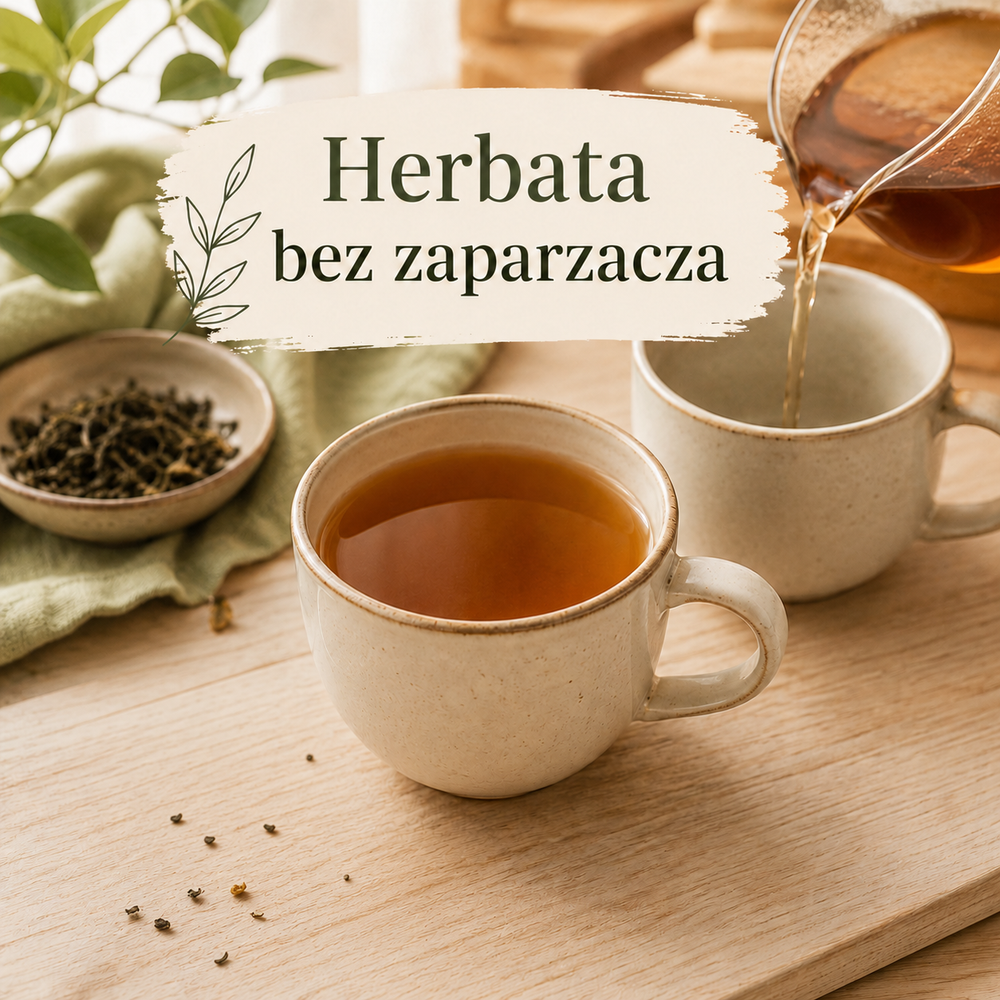
Loose leaf tea is usually associated with a strainer, infuser basket, or special teapot. However, not having an infuser doesn't mean you have to forgo your favorite brew. You can use items found in most kitchens to separate the leaves from the tea.
The easiest way to prepare loose leaf tea without an infuser is directly in a mug, then pour the brew through a kitchen strainer into another vessel. You can also wait for the leaves to settle at the bottom, use a coffee filter, a French press, or clean gauze.
In short
You can prepare loose leaf tea without an infuser in several ways:
- brew the leaves freely in a mug and drink the infusion carefully,
- pour the tea through a kitchen strainer,
- use two mugs,
- use a paper coffee filter,
- use a French press plunger infuser,
- make a makeshift sachet from gauze,
- prepare cold brew tea in a jar.
The most versatile solution is to brew the leaves loose and pour the finished tea through a fine strainer.
Can you brew loose leaf tea without an infuser?
Yes. An infuser is a convenient accessory, but it's not essential for brewing loose leaf tea. Its main purpose is to make it easier to separate the leaves from the finished brew.
The leaves themselves primarily need:
- an adequate amount of space,
- water at the right temperature,
- sufficient brewing time,
- the ability to separate them from the brew after brewing is complete.
In many cases, tea brewed freely can develop better than leaves confined in a small ball infuser.
Good to know: tea leaves expand in volume during brewing. The more space they have, the more evenly they can release flavor and aroma.
How to brew loose leaf tea without an infuser step-by-step?
The simplest method only requires a mug, another vessel, and a regular kitchen strainer.
What you'll need
Prepare:
- loose leaf tea,
- a mug or teapot,
- hot water,
- a fine kitchen strainer,
- another mug.
Brewing instructions
- Put the appropriate amount of leaves into the mug.
- Pour water over them at a temperature suited to the type of tea.
- Wait for the recommended brewing time.
- Place the strainer over the second mug.
- Slowly pour the brew through the strainer.
- Discard the trapped leaves, and drink the finished tea immediately.
This method allows precise control over the contact time of the leaves with water. This prevents the tea from becoming excessively intense or bitter.

How much loose leaf tea to put in a mug?
Most often, about 2-3 g of dried leaves, which is one level teaspoon, is enough for 250 ml of water. However, the exact amount depends on the size and type of leaves.
Approximate proportions:
| Type of tea | Amount for 250 ml of water |
|---|---|
| Black tea | 1 level teaspoon |
| Green tea | 1 level teaspoon |
| White tea | 1-2 larger teaspoons |
| Oolong | 1-2 teaspoons |
| Rooibos | 1 heaped teaspoon |
| Fruit tea | 1-2 heaped teaspoons |
| Herbal tea | 1-2 teaspoons |
Large, light leaves take up more space, so they may require a greater volume of dried leaves than finely cut tea.
How to choose the temperature and brewing time?
Water temperature greatly affects the taste of the brew. Water that is too hot can emphasize bitterness in delicate teas, while water that is too cold will not extract the full aroma from stronger blends.
| Type of tea | Water temperature | Brewing time |
|---|---|---|
| Black | 90-100°C | 3-5 minutes |
| Green | 70-80°C | 2-3 minutes |
| White | 75-85°C | 3-5 minutes |
| Oolong | 80-95°C | 2-4 minutes |
| Rooibos | 95-100°C | 5-8 minutes |
| Fruit | 95-100°C | 5-10 minutes |
| Herbal | 95-100°C | 5-10 minutes |
Exact recommendations may vary depending on the specific product. It's always a good idea to check the instructions on the tea packaging first.
1. Brewing leaves directly in a mug
The simplest way is to put the tea directly into a mug. After pouring water over them, the leaves can unfurl freely.
After brewing, you can:
- wait for the leaves to sink to the bottom,
- gently push them aside with a spoon,
- drink in small sips,
- pour the infusion into another mug.
This method works best for teas with large, whole leaves. Fine tea dust can float in the water and make drinking difficult.
Can you leave the leaves in the mug?
You can, but the tea will continue to brew. In the case of black or green tea, this can lead to a bitter and astringent taste.
Leaves can be left in the water a little longer for rooibos, fruit blends, and some herbal infusions. Even then, it's worth controlling the intensity of the beverage.
2. Pouring tea through a kitchen strainer
A fine kitchen strainer is one of the best substitutes for a classic infuser. It allows you to trap most of the leaves and separate the infusion exactly when you want.
A strainer made of:
- stainless steel,
- with fine mesh,
- wide enough to rest stably on a mug,
- free from the smells of spices and other products.
Before use, rinse the strainer thoroughly with hot water. This will remove any lingering odors and simultaneously warm the metal.
Key takeaway: a kitchen strainer provides similar control over brewing time as a classic infuser basket, although it requires using a second vessel.
3. Brewing tea using two mugs
If you don't even have a strainer, you can use two mugs.
Pour the leaves into the first mug and brew the tea. Then, place the second mug against the rim of the first in such a way as to leave a very narrow gap. Slowly pour the brew, retaining larger leaves in the first mug.
This method requires caution. The mugs can be hot, so it's best to place them on a stable surface and pour the tea slowly.
This method works well for large leaves, but it will not trap small fragments of tea.
4. Paper coffee filter
A paper coffee filter can serve as a makeshift infuser. Place it on a mug, put the leaves inside, and slowly pour water over them.
You can also brew the tea in a separate vessel and then pour it through the filter.
The advantage of this method is that it very effectively traps fine tea particles. The disadvantages can be slow pouring of the infusion and the retention of some natural oils responsible for the full flavor.
It's worth rinsing the filter with hot water beforehand to reduce the possibility of a papery taste.
5. Brewing tea in a French press
A plunger infuser, often called a French press, is not only used for making coffee. It can also be a convenient vessel for brewing tea.
Pour the leaves into the bottom, add water, and leave the plunger in the up position. After the appropriate time, slowly lower the plunger, then pour the entire infusion into cups.
Do not leave the finished tea in the French press, as the leaves under the plunger are still in contact with the water.
Thoroughly wash the vessel before brewing tea. Coffee grounds and oils can alter the delicate flavor of the brew.
6. Makeshift gauze sachet
Clean food-grade gauze or a cotton cloth can be used to make a disposable sachet.
Place a small amount of leaves in the center of the material, gather the edges, and tie them with a clean cotton thread. The sachet should not be tightly squeezed, as the leaves need space to unfurl.
For contact with hot water, use only:
- clean gauze,
- material without prints,
- fabric free of detergent odors,
- natural thread without dyes.
Do not use paper towels or materials that may disintegrate when exposed to hot water.
7. Cold brew tea prepared in a jar
Loose leaf tea can also be prepared without hot water. The cold brew method involves pouring cold water over the leaves and leaving them in the refrigerator for several hours.
For a jar or bottle, use about 5-8 g of tea per liter of water. Close the container and place it in the refrigerator for 6-12 hours. Then, pour the drink through a strainer.
Cold brew usually has a milder and less astringent taste than hot brewed tea. The method works well with green, white, fruit, and flavored teas.
How to prepare cold brew tea - see our guide
Can a spoon be used instead of an infuser?
A spoon won't trap all the leaves, but it can help push them aside while drinking or hold back larger pieces of dry leaves when pouring the infusion.
You can also gently skim small leaves from the surface. However, this is not as convenient or precise a solution as a strainer.
Will loose tea leaves sink to the bottom?
Some leaves sink to the bottom after a few minutes, but not all teas behave the same way. Fine tea dust, flower petals, herbs, and light additives can float on the surface for a long time.
Leaf settling is influenced by:
- their size,
- degree of curling,
- structure and density,
- water temperature,
- brewing time,
- presence of fruits, flowers, and spices.
It's not advisable to stir the infusion just before drinking. Allowing the mug to sit undisturbed for a few tens of seconds increases the chance that some of the dry tea will settle at the bottom.
Can I reuse a tea bag from another tea?
Emptying and reusing a disposable tea bag is not recommended. The material can tear, and closing the sachet will be difficult and unhygienic.
A better solution would be a paper coffee filter, clean gauze, or pouring the infusion through a strainer.
How to choose the best brewing method without an infuser?
The choice of method depends on the type of tea and the items available in the kitchen.
For fine tea
Choose:
- a fine strainer,
- a coffee filter,
- clean gauze.
Fine tea fragments can pass through wide strainer mesh and float in the infusion.
For large leaves
Choose:
- brewing directly in a mug,
- pouring between two vessels,
- a French press.
Large leaves settle more easily to the bottom and can be more effectively retained during pouring.
For tea prepared for several people
The most convenient will be:
- a larger teapot and kitchen strainer,
- a French press,
- a teapot with a built-in filter.
For cold tea
Just:
- a jar or bottle,
- cold water,
- a strainer used after maceration.

Common mistakes when brewing without an infuser
Too much tea
More leaves doesn't always mean better taste. The infusion can become too strong, astringent, or overpowering.
It's worth starting with one level teaspoon per mug and only changing the proportions for the next brew.
Leaving the leaves in the water for too long
Leaves continue to release flavor compounds as long as they remain submerged. Black and green tea can quickly become bitter as a result.
After brewing, it's best to pour the entire infusion into another mug.
Using boiling water for every tea
Boiling water is suitable for black tea, rooibos, and many fruit and herbal blends. However, it can be too hot for green teas, white teas, and delicate oolongs.
Pouring hot tea too quickly
Pouring quickly increases the risk of spilling the infusion and scalding. Vessels should be held steadily, preferably by the handles.
Using a strainer that smells of spices
A strainer previously used to sift intense spices can alter the aroma of the tea. Before use, it should be thoroughly washed and rinsed with hot water.
Too little space for the leaves
A tightly bound gauze sachet or a very tight filter restricts the leaves from unfurling. The tea should have enough space for water to flow freely around it.
Is it worth buying a tea infuser?
If loose leaf tea is prepared regularly, an infuser greatly simplifies daily brewing. It allows you to quickly remove the leaves, reduces the number of dishes to wash, and helps precisely control the brewing time.
The most versatile choice is a large basket infuser. It fits many mugs and provides more space for the leaves than small ball infusers.
A good infuser should:
- be made of stainless steel or food-grade material,
- have fine mesh,
- fit the diameter of the mug,
- provide space for the leaves to unfurl,
- be easy to empty and wash.
See infusers recommended by specialists.
Which teas are easiest to brew without an infuser?
Teas with large, whole leaves are the most convenient. They settle to the bottom more easily and are less likely to get into your mouth while drinking.
Good choices include:
- loose leaf black teas,
- oolong teas,
- white teas,
- green teas with larger leaves,
- fruit blends with large pieces of fruit.
Finely cut blends, rooibos, and small herbs are best poured through a fine-mesh strainer.
Recommended accessories for convenient tea brewing
Finum M infuser
The large basket allows the leaves to unfurl freely and can fit many mugs and small teapots. It's a convenient solution for people who drink various types of loose leaf teas.
Glass teapot with infuser
A teapot with a removable filter makes it easier to prepare a larger amount of tea and stop the brewing process at the right moment.
Large capacity tea mug
A larger mug provides more space for the leaves to brew freely. It's also easier to pour the infusion without spilling.
FAQ
How to brew loose leaf tea when I don't have an infuser?
Put the leaves directly into a mug, pour water over them, and wait for the appropriate time. Then, pour the tea through a fine strainer into another vessel. This is the simplest and most versatile way to brew without an infuser.
Can you drink tea with leaves in the mug?
Yes, especially when the tea has large leaves that have settled to the bottom. However, you should drink the infusion calmly and avoid stirring. Leaves left in the water can continue to brew and increase the tea's astringency.
What can replace a tea strainer?
A tea strainer can be replaced with a coffee filter, clean gauze, a French press, or a second mug used to carefully separate larger leaves.
Can you brew loose leaf tea in a teapot without a strainer?
Yes. You can put the leaves directly into the teapot and pour the finished brew through a kitchen sieve. It is important to pour out all the tea after brewing so that the leaves do not remain in the water for too long.
Is a coffee filter suitable for tea?
Yes. A paper coffee filter effectively catches small leaves and herbs. Before use, it is worth rinsing it with hot water to reduce the papery taste.
How to separate leaves from tea without a strainer?
Large leaves can be left at the bottom or held back when pouring the brew between two cups. For fine tea, it is best to use a paper filter or clean gauze.
Can you brew loose leaf tea in a French press?
Yes. Pour water over the leaves, brew with the plunger raised, and then slowly lower it. After brewing, pour the entire brew into cups.
Why is loose leaf tea bitter?
A bitter taste can result from too high water temperature, too long brewing time, or using too much tea leaves. The problem most often occurs with green and black teas left in the cup for a long time.
Can tea leaves be brewed again?
Many loose leaf teas, especially green, white, and oolong, can be brewed multiple times. For subsequent brews, it is worth slightly extending the time the leaves are in contact with water.
What is the easiest way to brew without an infuser?
The easiest way is to brew the leaves directly in a cup and pour the infusion through a fine kitchen sieve. This method works with most types of tea and allows good control over brewing time.
Summary
Lack of an infuser is not an obstacle to preparing good loose leaf tea. The simplest way is to brew the leaves directly in a cup or teapot, and then pour the finished infusion through a kitchen sieve.
In an emergency, you can also use a coffee filter, French press, clean gauze, or two cups. The most important thing is to use the correct water temperature and separate the leaves after brewing.
If you regularly drink loose leaf tea, a large basket infuser or a teapot with a filter can significantly increase the convenience of preparing your brew. See available infusers and choose a solution tailored to your favorite cup and type of tea.